
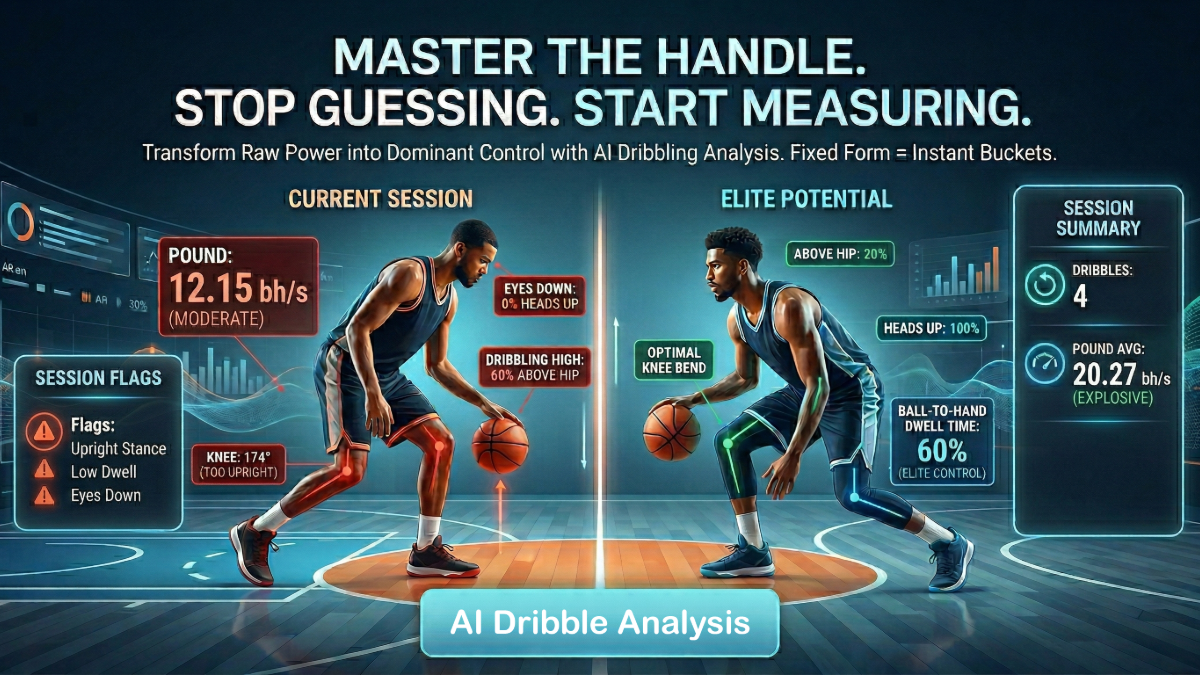
AI Dribble Analysis

Elite ball handling comes from a blend of fundamental repetition and precise, data-driven feedback. This page explains the core dribbling habits to train and the computer vision metrics that help validate them.

AlphaPeak logo

Dribbling should not just survive pressure. It should create advantages.

Slow-motion video and AI keypoint tracking make ball handling measurable. Athletes can compare what they think they are doing against what their body and the ball are actually doing, then tighten mechanics with targeted coaching.

Basketball dribble analysis illustration

The Fundamentals

Build the handle first with posture, force, and vision.

Before video review, the athlete needs to internalize three non-negotiable habits. Great dribbling starts with repeatable mechanics, not tricks. The goal is to keep the ball protected while staying ready to attack.

  • Pound the ball: the ball should hit the floor hard so it returns quickly to the hand. Faster bounce timing means less exposure to steals.
  • Play in an athletic posture: drop the hips, bend the knees, and keep the chest up so the first step stays explosive.
  • Eyes up: train peripheral vision and tactile feel so you can read defenders, spot teammates, and react without staring at the ball.

Control comes from force and body position, not soft touches alone. A low, balanced center of gravity gives the athlete more options on every move.

AI Form Analysis

Turn subjective coaching into objective dribble mechanics.

When an AI model tracks skeletal keypoints and ball location frame by frame, the athlete gets measurable feedback instead of general impressions. These are the most valuable metrics to extract from the video.

1. Knee Flexion and Hip Height

Track knee angle and hip height to quantify the athletic stance. If the hips rise before a crossover or drive, the athlete is standing up and losing explosiveness.

2. Gaze Angle and Head Pitch

Measure head and facial keypoints relative to the shoulders to prove whether the athlete actually keeps their eyes up during the drill.

3. Dribble Peak Height

Track the highest point of the ball on each bounce. A functional dribble should rarely rise above the waist; chest-high peaks are too loose and easier to steal.

4. Ball-to-Hand Dwell Time

Compare frames where the ball overlaps the hand against time in the air. Better handlers keep legal contact longer to improve manipulation and control.

5. Vertical Ball Velocity

Measure the ball speed from hand to floor and back up. This shows how hard the athlete pounds the ball and how efficiently force transfers into the bounce.

Basketball dribble technique and motion tracking