AI Running Form Analysis

Understanding your biomechanics is one of the most effective ways to maximize your speed, improve your efficiency, and stay injury-free. This page shows how to capture your video correctly and what the AI tool reports back once the analysis is complete.

AlphaPeak logo

Record clean video, upload two short clips, and review immediate biomechanical feedback.

The first level of analysis uses a basic form analysis tool. By simply recording a video on your smartphone, you can unlock immediate insights into your running mechanics. For athletes who want a deeper event-specific review, advanced Sports Performance Assessments are also available through AlphaPeak.

Instructions for recording a running form analysis video

How To Record

Capture the right clips so the analysis is accurate.

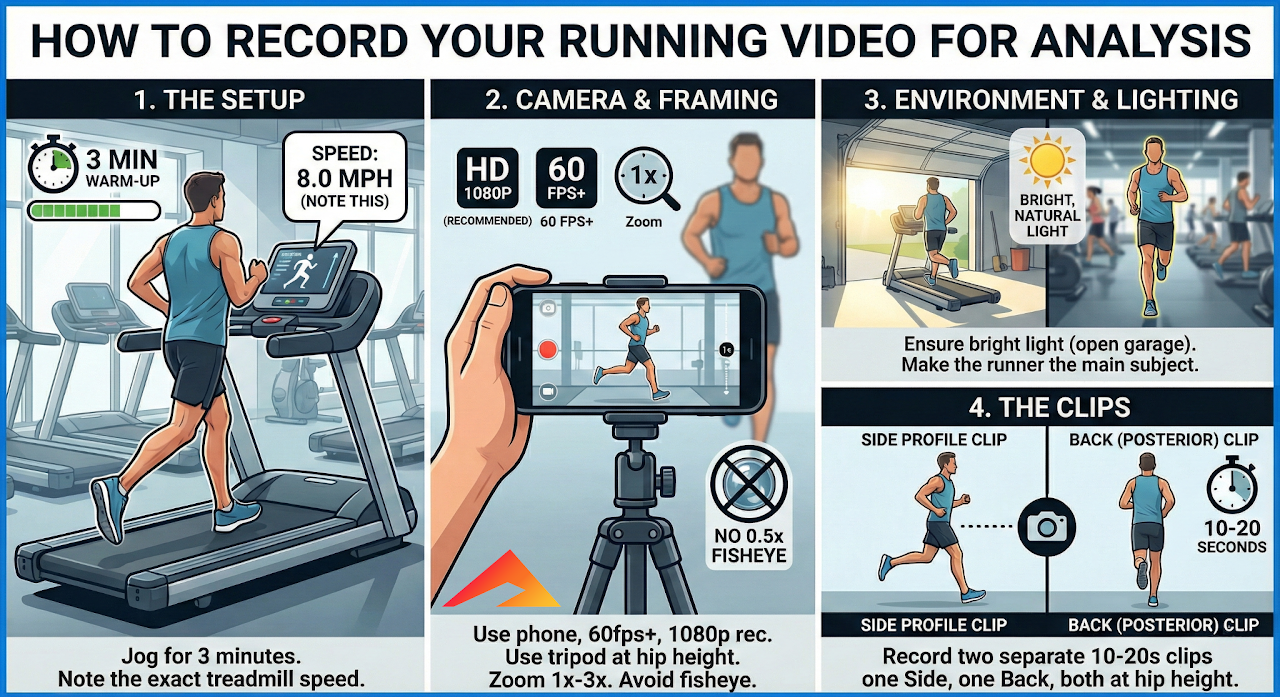
  • The setup: run on a treadmill at a comfortable, controlled jog for 3 minutes to warm up and settle into your natural stride. Note the exact speed of the treadmill.
  • Camera quality: record with a phone at 60 fps or higher. HD 1080p is recommended, and 720p also works.
  • Framing: record vertically or horizontally. Use 1x to 3x zoom so your full body stays in frame. Avoid the 0.5x fisheye lens, which can distort movement.
  • Stability: whenever possible, use a tripod or stable support and keep the camera level with the horizon.
  • Environment: you should be the most prominent person in frame, with bright lighting and a clear view of your movement.
  • The clips: record two separate clips, each 10-20 seconds long, at about hip height: one from the side and one directly from the back.
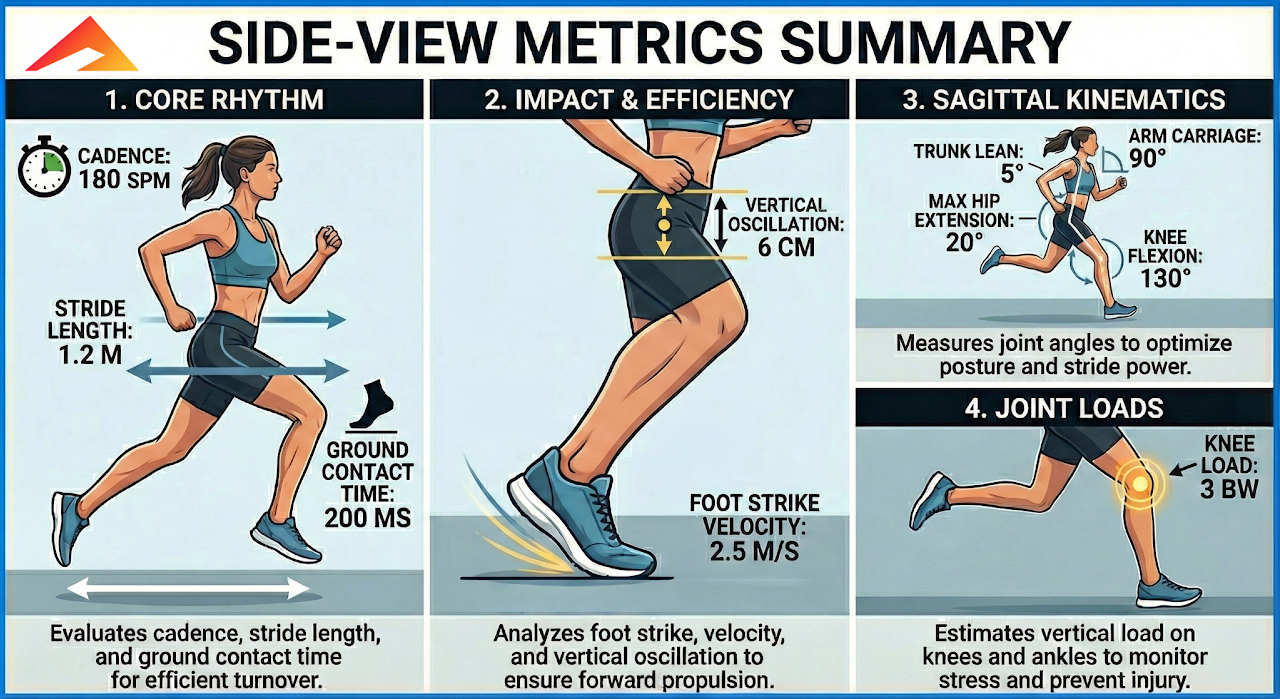
Side-view sagittal running metrics summary

Sagittal View

Side-view metrics show rhythm, efficiency, posture, and load.

Once uploaded, the tool provides live overlays and coaching guidance. The side-view analysis focuses on the mechanics that drive forward speed and how efficiently you convert force into motion.

Core Rhythm

Cadence, stride length, and ground contact time show how efficiently you turn over each step.

Impact & Efficiency

Foot strike pattern, foot strike velocity, and vertical oscillation show whether energy is moving you forward instead of up.

Sagittal Kinematics

Knee flexion, max hip extension, trunk lean, and arm carriage help refine posture and stride power.

Joint Loads

Vertical loading estimates on the knees and ankles help flag stress that can lead to overuse injury.

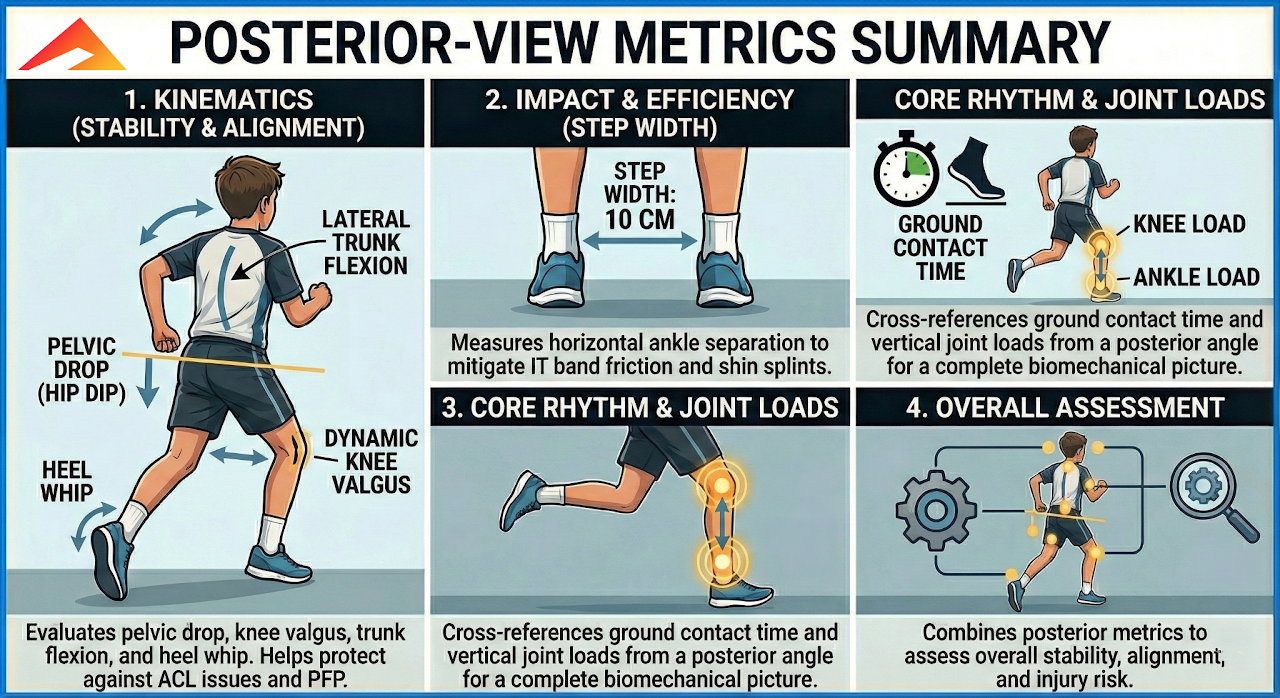
Posterior running stability metrics summary

Posterior View

Back-view metrics focus on stability, alignment, and asymmetry.

The posterior analysis centers on how well you control side-to-side movement. This is where the tool helps identify issues tied to pelvic stability, knee alignment, and recurring loading imbalances.

Kinematics

Pelvic drop, dynamic knee valgus, lateral trunk flexion, and heel whip help monitor movement patterns tied to ACL and patellofemoral stress.

Impact & Efficiency

Step width measures the horizontal separation between the ankles to reduce IT band friction and shin splint risk.

Core Rhythm

Ground contact timing from a second angle helps confirm whether the stride stays balanced from left to right.

Joint Loads

Secondary-angle loading checks complete the biomechanical picture and help reveal uneven stress patterns.